1. The plights of logistics managers behind the myth of “breaking away from Amazon”;
2. Amid a major transformation in cross-border e-commerce, traditional logistics planning has become ineffective; a dual-driven mechanism of “supply chain planning + logistics execution” needs to be established at an accelerated pace;
3. Applying supply chain thinking to address the dual challenges of tariff wars and multi-platform operations
Trump’s tariff hikes have sent shockwaves across all cross-border sellers. Amid drastic changes in the e-commerce landscape, logistics teams, as a critical pillar ensuring smooth cross-border operations, are undergoing a new round of stress tests with strong execution. In the VUCA era, upgrading from point breakthroughs to systematic operational capabilities may be a question that all cross-border e-commerce players need to reflect on together.
The Daily Scapegoating of Logistics Managers:
How Platform Rules Become Supply Chain Bottlenecks
The core value of logistics managers lies in refined end-to-end operations: fulfilling transportation tasks assigned by operations managers, selecting the most cost-effective logistics providers to move goods from origin to destination, and ensuring unobstructed logistics flows. They mainly act as executors, formulating transportation plans based on operational schedules.
On a deeper level, supply chain standards set by the industry and platforms have become the “playbook” for logistics managers. Taken for granted, these standards often overshadow the efforts and challenges faced by logistics teams behind the scenes.
Amazon FBA, for example, is an efficiency-focused fulfillment supply chain model, different from traditional foreign trade supply chain processes. Logistics managers only need to follow standard platform procedures and corporate operational plans. In this process, supply chain planning is subtly replaced by platform rules, making it barely perceptible. E-commerce businesses operating on Amazon for a long time often ask themselves: “How can we break free from Amazon?”
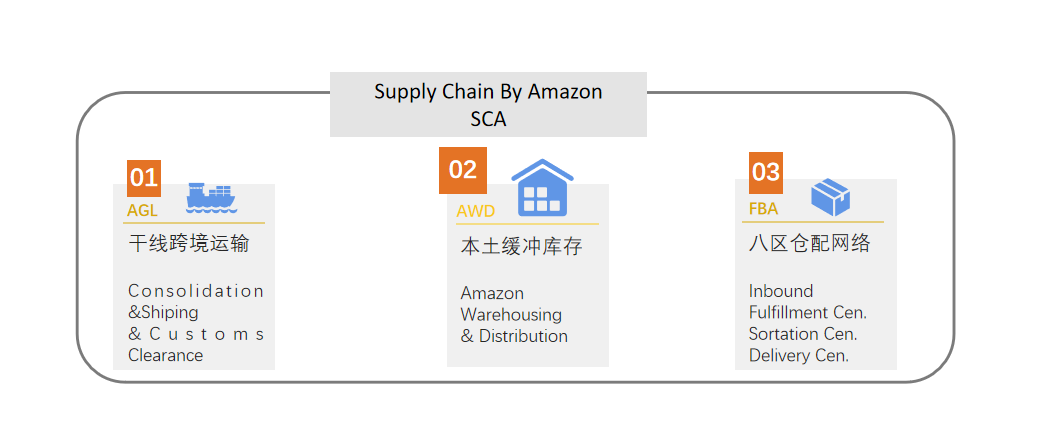
In reality, long-term reliance on platform-defined supply chain frameworks easily creates path dependence and erodes a company’s ability to plan its supply chain independently. Even with logistics seemingly well-arranged, sellers are left adrift when facing unexpected disruptions or complex operational needs outside standard protocols.
A Major Transformation in Cross-Border E-commerce:
The Need to Establish a
Dual-Driven Mechanism of “Logistics Execution + Supply Chain Planning”
Today, tariff wars have erupted and are likely to intensify in the coming years. Multi-platform operations have become a trend for sellers. Amazon’s inventory placement strategy has pushed large and small sellers onto divergent growth paths. Semi-managed models on Chinese platforms remain indispensable, while direct shipping businesses face crippling tariff barriers. For logistics managers, how to navigate these changes is a question worthy of deep reflection.
Bargaining with logistics providers, optimizing transport routes, and innovating loading solutions offer little substantive value amid drastic external changes, let alone deliver genuine strategic initiative.
Rather than saying logistics managers’ “tricks of the trade” no longer work, it is more accurate to state that sellers’ traditional organizational structures are in need of adjustment. Facing a market environment full of uncertainty and complexity, cross-border e-commerce businesses need to establish a dual-driven mechanism of “supply chain planning + logistics execution”: supply chain planning builds buffers in forward layout, network design, and risk preparedness, while logistics teams continue to leverage their expertise in provider management and transportation optimization. Only in this way can businesses shift from passively accepting risks to proactively avoiding them, and enhance overall competitiveness in the process.
The responsibilities of supply chain managers are far broader than ever. Their core work includes not only supply chain planning but also forward product development, global procurement layout, logistics network design and execution, demand forecasting, risk management, and more.
Taking the ongoing tariff wars and multi-platform operations as examples, how do solutions from supply chain managers differ?
Supply Chain Thinking
Addressing the Dual Challenges of Tariff Wars and Multi-Platform Operations
1. From Transportation Optimization to Global Network Restructuring
In the past, tariffs had a relatively small impact, and many direct-shipping sellers were unfamiliar with HS codes and their corresponding tax rates. Today, however, understanding the HS codes applicable to their product categories has become critical.
Sellers must be clear about tax rate differences between codes. For the same product, such as clothing or shoes, a difference of more than 10% in tariffs can occur simply because over 50% of the material is leather (cotton) versus synthetic leather (chemical fiber).
In such cases, sellers may need to adjust product materials to qualify for lower tariffs. If tariffs from China are too high, sellers must evaluate the most favorable locations for production and procurement across different categories. Thorough research into rules of origin becomes essential. For instance, moving headphone packaging lines to Vietnam can save $0.80 per unit in tariffs. For furniture, countries like China, Malaysia, and Mexico each have unique advantages.
Diversified procurement source evaluation also includes future logistics and transportation planning. The future “China + N” sourcing strategy presents a new challenge: how to build regional consolidation and distribution hubs within the U.S. This was also the essence of Amazon’s fully managed supply chain service launched at its conference last year (to be covered in a dedicated feature later).
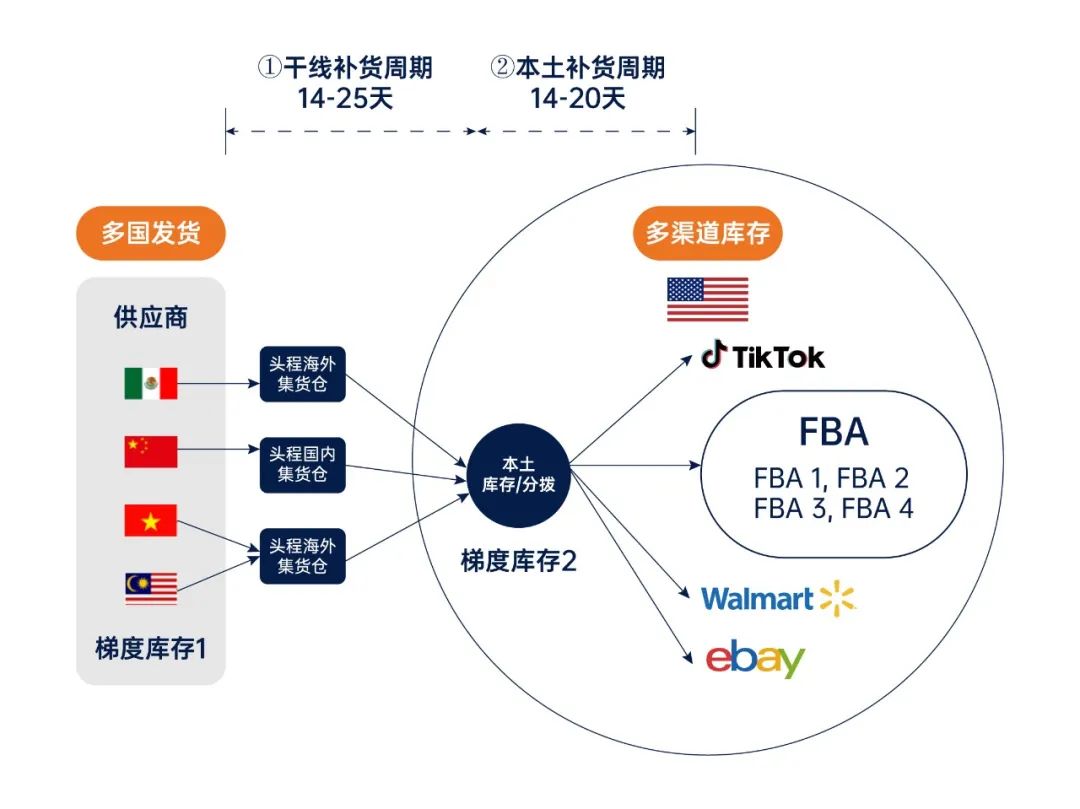
Therefore, supply chain managers must deeply participate in global procurement layout to ensure the reconstruction of future supply chain networks, a key part of supply chain planning. Understanding free trade agreements signed by destination consumer countries is often the fundamental guide to developing sourcing locations.
2. From Price Negotiation to Value Creation
Overseas logistics has low supply elasticity and is less competitive than the Chinese market. Meanwhile, the Amazon-led warehousing and fulfillment supply chain has completed upgrades, leading to a divergence in the competitive landscape among e-commerce sellers. In the past, warehouse logistics was mainly driven by order data, which could not fundamentally solve the problems of long last-mile delivery times and cost control.
Today, multi-warehouse fulfillment networks enable two-way alignment between order data and distributed inventory. A lack of inventory in a region usually means few or no orders there, directly widening the gap between large and small sellers.
At present, some pioneering Chinese sellers have implemented Haisen’s six-zone inventory allocation through the FBM model, limiting delivery distances to 3–4 zones and completing delivery within two days. Amazon automatically grants them the Prime badge, driving traffic support. This reflects the strengths of supply chain managers, complementing those of logistics managers perfectly.
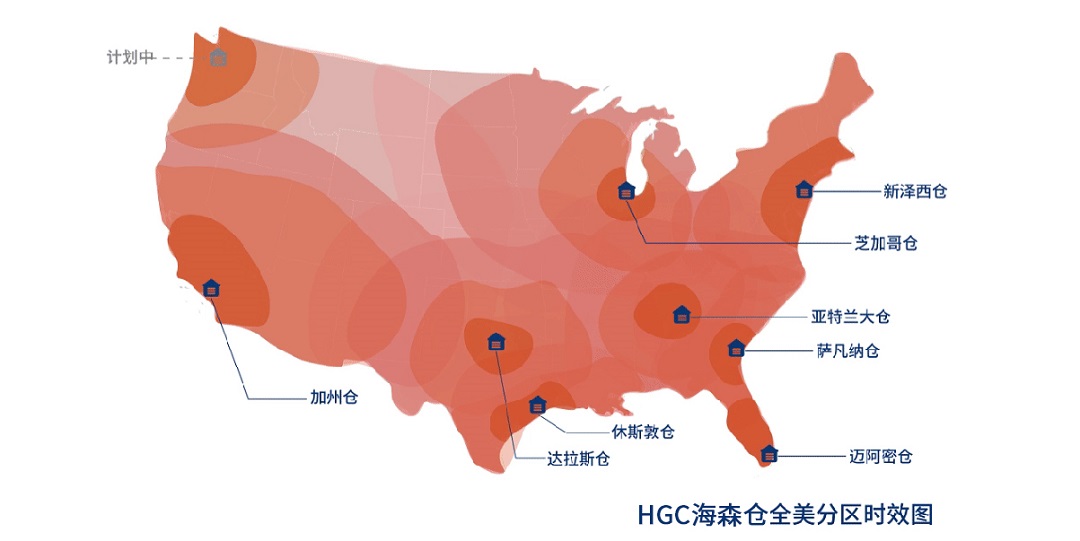
In this scenario, sellers often find that even if Provider B (with 3 warehouses) offers a larger price discount, its overall logistics cost and timeliness cannot compete with Provider A (with 6 warehouses). Under such circumstances, logistics managers’ price negotiation skills are no longer decisive.
By contrast, small sellers can deepen inventory in key regions and adopt price wars to compete with large sellers. Choosing Provider B may help offset the disadvantage of fewer warehouses and build competitive advantages in local markets. Large sellers, focused on national supply chain layout, rarely engage in price wars easily, allowing small sellers to achieve sales growth in specific regions.
At this stage, the zero-sum game between supply chain managers and logistics providers evolves more into a relationship of value co-creation and strategic collaboration.
3. From Passive Execution to Proactive Forecasting, from Point Optimization to Global Coordination
Once supply chain managers take the lead in integrating procurement, production, sales, and other processes, establishing real-time and accurate data sharing and more efficient supply chain coordination mechanisms, end-to-end cost control, segmented optimization, and supply chain resilience can be truly achieved. This also involves the restructuring of internal organizational structures and redistribution of authority.
At the core of it all is supply chain planning. With proper planning, the competitive principle of “trading time for space and space for time” can be realized.
In the second half of cross-border e-commerce, businesses need not only logistics optimization but also a comprehensive upgrade of supply chain thinking. As a core force for cost reduction and efficiency improvement, logistics managers possess unique professional advantages and practical experience, and are fully capable of leading this transformation. Feel free to share your thoughts in the comment section!