Hello, and welcome to our flagship launch for 2026. This marks the fourth year of our series “9 Predictions for Cross-Border E-Commerce”.
You cannot discover new continents using an old map. Cross-border e-commerce is an industry without a fixed roadmap, where every year brings new frontiers. Forecasting is not about fortune-telling, but a steppingstone built on factual reasoning. It broadens our vision, pinpoints relative certainties, and allows strategic planning in the chess game of global expansion — this is the original purpose behind this annual creation.
This year, we are taking it a step further.
We have restructured the previously parallel “9 Predictions” into three parts, focusing on the “Three Major Battles” for cross-border e-commerce in 2026: Platform Competition, Logistics Transformation, and Market & Policy Trends.
Midway through January, what lies ahead for cross-border e-commerce in 2026?
We invite you to deduce and explore together.
As in previous years, a reminder to readers: this is for public discussion, constructive criticism is welcome, and nothing herein constitutes commercial advice.
30-Second Overview:
I. Game of Power (Platform Competition)
1. Amazon in 2026: Trading Time for Space vs. Trading Space for Time — taking over and streamlining supply chain dominance from the source of goods;
2. E-commerce Platforms: Strengthening defenses, building reserves, and centralizing control over upstream and downstream ecosystems; offline giants accelerate their e-commerce expansion;
3. AI, AI, AI: A transformative focus in 2026, reshaping the “people, products, and marketplace” of cross-border e-commerce, and bringing AI-powered commerce to life
II. Variables of Order (Logistics Transformation)
4. Overseas Warehousing in 2026: Separation of warehousing and delivery, commercial flow reshaping logistics, and overseas warehouses at a crossroads of scaling and intelligence;
5. Ocean Shipping in 2026: Supply-demand mismatch, 10–15% overcapacity, expected resumption of Red Sea routes, and potential decline in freight rates;
III. The Human Side of Global Expansion (Market & Policy Trends)
6. Global Economy in 2026: Global GDP growth of 2.6%, U.S. growth of 2.2%, Eurozone growth of 0.9%;
7. U.S. in 2026: Economy “cool first, heat later”, fiscal stimulus in Q2, cooling tariff wars, and vigilance toward midterm elections;
8. Europe in 2026: Economy “moderate”, €3 tariff taking effect in July, and easing relations between China, Europe, Canada, and Australia;
9. RMB Exchange Rate: Strengthening Euro, weakening U.S. Dollar, moderate appreciation of RMB, fluctuating within a range of 6.7–7.2;
Detailed analysis below:
01. Amazon in 2026: Trading Time for Space vs. Trading Space for Time — Taking Over and Streamlining Supply Chain Dominance from the Source
The three ultimate philosophical questions: Who am I? Where do I come from? Where am I going?
The philosophy of the “next-generation cross-border supply chain” in 2026: I am Amazon, moving from controlling “where goods are sold” to controlling “where goods come from”.
The essence of Amazon’s Shenzhen warehouse for origin consolidation is the centralization and simplification of supply chain power.
Its core strategy shifts inventory allocation from “many-to-many” to “one-to-many”: in the past, sellers arranged FBA shipments independently; now Amazon encourages consolidating goods at its Shenzhen warehouse first, with AI algorithms deciding where and how much to distribute globally.

Source: Amazon’s “Next-Generation Cross-Border Supply Chain”
A small step forward for Amazon represents a giant leap for supply chain transformation.
This marks a fundamental shift in platform thinking: from the traditional overseas warehouse model of “trading space for time” (stocking inventory at sales locations) to a platform-led model of “trading time for space” (consolidating goods at origin and using algorithmic speed to optimize global warehouse network utilization).
· The impact on sellers has two sides:
On one hand, logistics operations are greatly simplified, with AI taking over complex inventory planning, cross-border transfers, and capacity allocation;
On the other hand, while origin shipping scales up and pricing stabilizes, sellers lose autonomy in supply chain optimization and become more dependent on the Amazon ecosystem.
· The impact on the industry is even more profound:
It is not merely launching a new service, but defining a new set of rules: leveraging platform data and cargo volume, Amazon will aggressively enter the origin shipping market, capturing a share of business from FBA origin service providers and shipping lines, especially the more compliance-heavy segments.
Of course, it is still in the early stages. Many factors remain to be seen as Amazon turns vision into reality, including pricing, payment terms, compliance, service flexibility, seller operational rights, and internal integration challenges.
02. E-commerce Platforms: Strengthening Defenses, Building Reserves, Centralizing Upstream and Downstream Ecosystems, and Offline Giants Accelerating E-Commerce Layout
In 2026, e-commerce platform competition has fully shifted from a “traffic war” to a “fulfillment war”, with platforms centralizing upstream and downstream supply chains to build deeper, more controllable, and higher-barrier business closed loops.
Key platform trends:
1. Passing on compliance and cost pressures: New EU tariffs and rising last-mile delivery fees are unavoidable for platforms, which will gradually shift part of the burden to sellers through higher commissions, increased logistics fees, stricter price comparisons, and tighter entry restrictions.
2. Seller filtering: Amazon’s FBA/MCF fee hikes, supplier price demands, Temu’s increased security deposits, and eBay’s rising commissions in 2026 are essentially using cost control to screen sellers with stronger risk resilience.
3. Tightening control over logistics: Controlling both commercial flow and logistics. Platforms secure logistics nodes, deeply integrate upstream and downstream, enforce unified logistics data, and shorten fulfillment cycles to bind high-quality sellers with resources, control buyer experience, and build competitive barriers.
4. Optimizing seller, market, and channel structures: eBay’s “Thousand Sails Program”, TikTok’s commission incentives for new merchants, SHEIN’s “Order Boom Program”, Temu’s integration with Shopify, and Shopify’s connection with Google AI all represent new growth in the era of inventory revitalization.
Future business competition will be unadorned: it is no longer a duel between platforms, but a confrontation between ecosystems. Only winners get a seat at the table; losers become the table.
Underlying logic: The platform landscape has entered a stage of “supply chain depth”. Selling products is only basic; selling “certainty” is fundamental.
Global uncertainty has turned “certainty” into currency. Every platform aims to hold the money printer, providing buyers with guaranteed products, delivery, and service to withstand industry cyclical fluctuations.
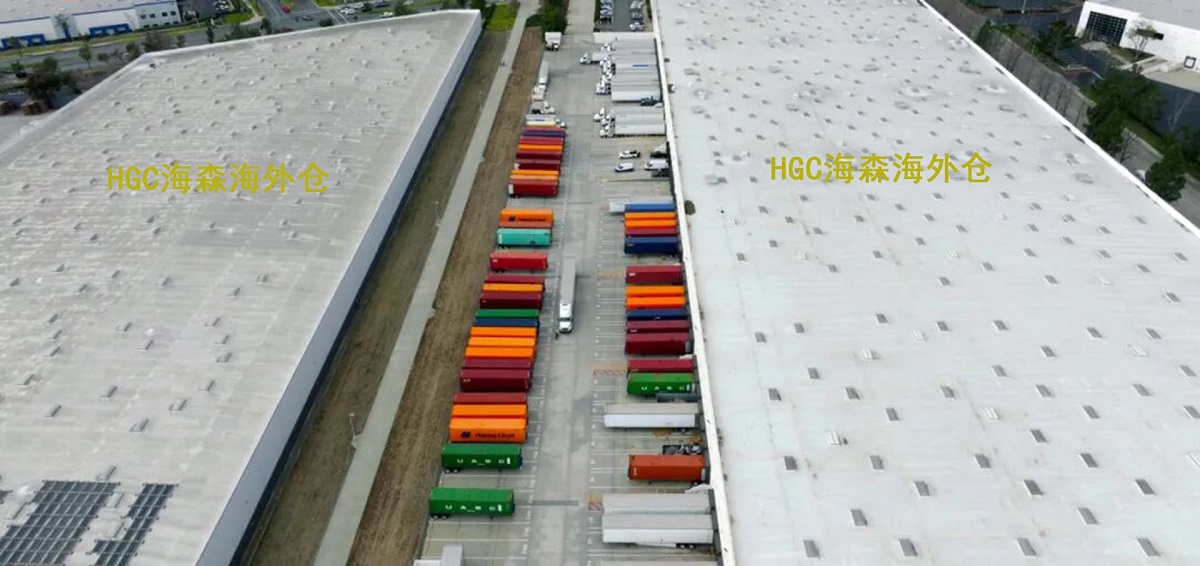
Meanwhile, two new shifts are reshaping the cross-border e-commerce platform landscape:
1. “Localization and regionalization” take priority over “cross-border”;
a. Heightened geopolitical uncertainty. In an era of deglobalization, tariff wars, regional conflicts, conservatism, and logistics disruptions have made sellers’ cross-border supply chains more unstable;
b. Global e-commerce tax reforms. Supportive policies for e-commerce have mostly expired, and governments are scrutinizing low-cost, high-volume inbound parcels, forcing sellers to restructure their cross-border compliance frameworks;
In an era of great uncertainty, platforms and logistics providers pursue certainty, making overseas warehouses strategically invaluable as sellers’ “overseas bases”: turning cross-border e-commerce into local e-commerce, using certainty to counter uncertainty.
2. Local offline giants accelerate e-commerce deployment.
a. Local overseas retail competition. Offline retailers are moving online to build a “second growth curve”, competing with existing e-commerce platforms across cost, product portfolios, logistics supply chains, and services.
b. Digital technology iteration. The adoption of AI and other technologies accelerates offline retail transformation, creating a 3–5 year window for more offline enterprises to follow Walmart’s e-commerce transition.
Examples include Target, Costco, Best Buy, and The Home Depot, where “omnichannel retail” has become a survival rule for U.S. offline giants, essentially reshaping the entire retail framework with e-commerce.
As offline players transition to e-commerce, sellers gain more platform access options, enriching the industry ecosystem and intensifying platform competition. The infrastructure value of overseas warehouses remains unchanged: providing sellers with “one inventory for multiple platforms” services.
03. AI, AI, AI: A Transformative Focus in 2026, Reshaping Cross-Border E-Commerce “People, Products, Marketplace” and Launching AI-Powered Commerce
AI may sound abstract and distant from our “down-to-earth” industry, but Amazon’s 2026 Hangzhou Summit — from AI assistant Xiao Dai to AI-driven origin inventory planning — signals an all-in commitment to AI.
For giants of this scale, every major bet is not tentative, but a firm pivot toward the future.
In Silicon Valley, the rapid evolution of AI has created widespread anxiety, and it will eventually disrupt every industry, including cross-border e-commerce.
AI + Cross-Border E-Commerce = The Next Decade. How will it reshape “people, products, and marketplace”?
For instance, future best-selling SKUs may be “invented” by AI algorithms: crawling real-time global trends, social sentiment, popular elements, and viral traffic points, reverse-engineering supply chain capacity and costs to create new products directly.
Your competitor will no longer be a rival company down the street, but a hyper-powered algorithmic contender.
Another example: “AI shopping assistants”. Buyers only need to provide a vague description, and AI automatically compares global prices, generates trial effects, plans optimal logistics solutions, and connects product recommendations, payment, logistics, and after-sales service — leaving only payment to the user.
This is not speculation: Chinese AI platforms like Doubao and international ones like Google are already doing this. Interested readers can search for UCP.
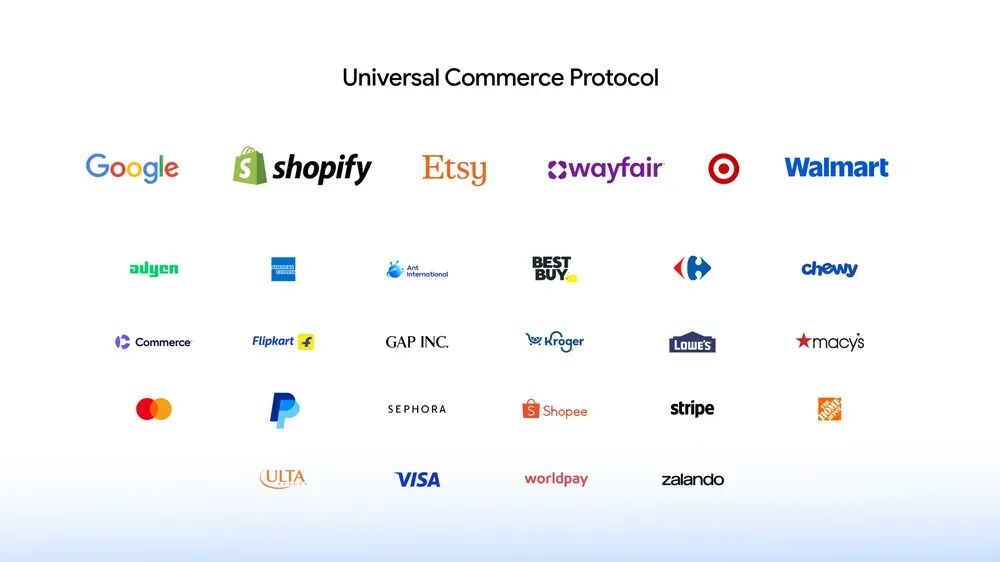
Platforms and institutions integrated with Google AI (Source: Google Blog)
The power of AI lies in taking over all standardized work that follows “Step A to Result B”.
Examples include AI “digital twins”, allowing sellers to simulate and test business ideas; AI-driven demand forecasting and replenishment, keyword optimization, and advertising strategy; and the popular “One Person Company (OPC)” model, where AI redefines entrepreneurial models for sellers.
An old saying goes, “Remain unchanged to respond to all changes”, but with AI, we must “embrace change to preserve what matters”. Falling behind means being outcompeted; if you can’t beat it, join it. Passion alone is no match for AI-powered efficiency.
Perhaps in three to five years, AI will determine whether we struggle to keep up or operate with ease.
04. Overseas Warehousing in 2026: Separation of Warehousing and Delivery, Commercial Flow Reshaping Logistics, and Overseas Warehouses at a Crossroads of Scaling and Intelligence
E-commerce platforms clearly understand the lessons of history: semi-managed warehousing and delivery separation emerged first, followed by Amazon’s integration of origin shipping.
The grand trend of the world is division and unity.
“Separation of warehousing and delivery” is an unavoidable theme for overseas warehouses in 2026, driven collectively by Chinese e-commerce platforms and differentiated discount policies from last-mile service providers.
Traffic from new commercial flow models will inevitably restructure existing logistics frameworks. Platforms’ strong push for warehousing-delivery separation is essentially about seizing dominance, controlling supply chains, moving from segmented outsourcing to direct management, and turning upstream and downstream service providers into collaborative nodes in the supply chain.
Looking ahead to 2026, overseas warehouses stand at a crossroads:
“Semi-managed” cargo volumes still lag far behind Amazon’s scale, and product diversity remains a challenge. After platforms drive down delivery costs via warehousing-delivery separation, overseas warehouses are pressured to focus on efficiency and cost reduction, prioritizing speed and affordability and evolving toward intelligent warehouses optimized for small and light items.
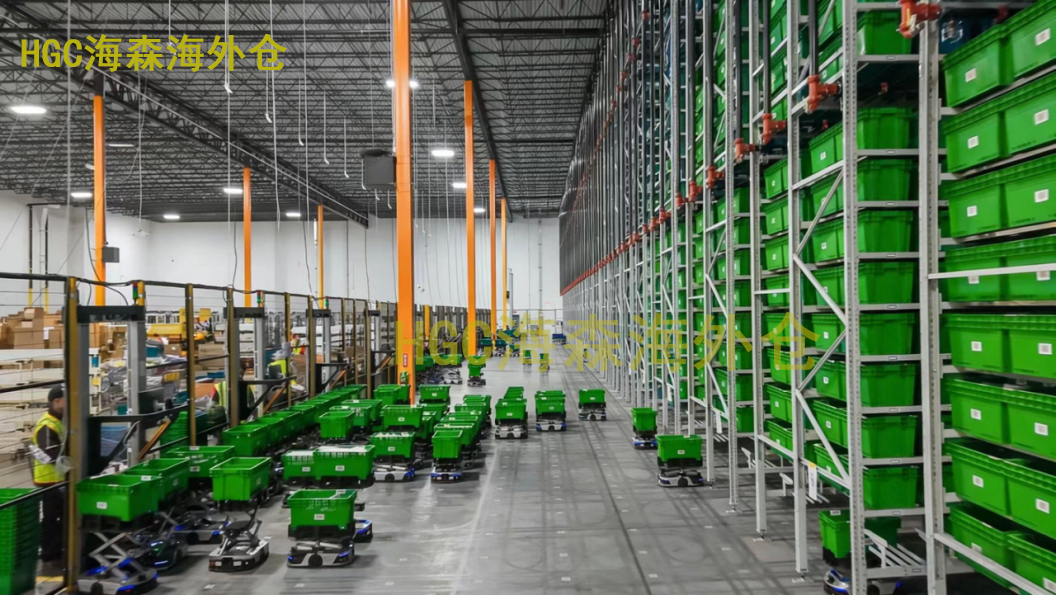
Amazon adopts a “zoned fulfillment” mindset. The spillover demand for large items naturally requires zoned stocking and localized delivery in overseas warehouses, achieving efficiency and cost reduction through multi-warehouse proximity shipping and pushing overseas warehouses toward scaling and networking.
With distinct commercial flow divides, how can overseas warehouses rebuild their competitive moats?
We believe overseas warehouses capable of both scale and intelligence will become scarce resources.
Scale and efficiency are not contradictory. Sufficient volume supports intelligent upgrades, and high efficiency captures incremental small-parcel business. A dual-strength approach improves risk resilience, allowing one warehouse to serve sellers across multiple platforms and markets.
Small-scale warehouses cannot support semi-managed models, and Amazon is integrating the supply chain. Sellers also face choices. Mature overseas warehouses that balance both strengths can offer sellers the best of both worlds.
05. Ocean Shipping in 2026: Supply-Demand Mismatch, 10–15% Overcapacity, Expected Resumption of Red Sea Routes, and Potential Freight Rate Decline
Annual question: Will ocean freight rates drop in 2026?
Barring unexpected events, a freight rate decline is highly likely, as the container shipping market faces a structural contradiction of “weak demand growth” and “significant oversupply”.
Demand side: Shipping institution BIMCO forecasts moderate global container demand growth of 2.5%–3.5% in 2026, with a repeat of 2025’s panic stockpiling unlikely;
Supply side: Capacity was already 13%–14% oversupplied in 2025, partially absorbed by Red Sea diversions, but this buffer will disappear in 2026.
Because the Suez Canal is highly likely to “resume normal navigation”.
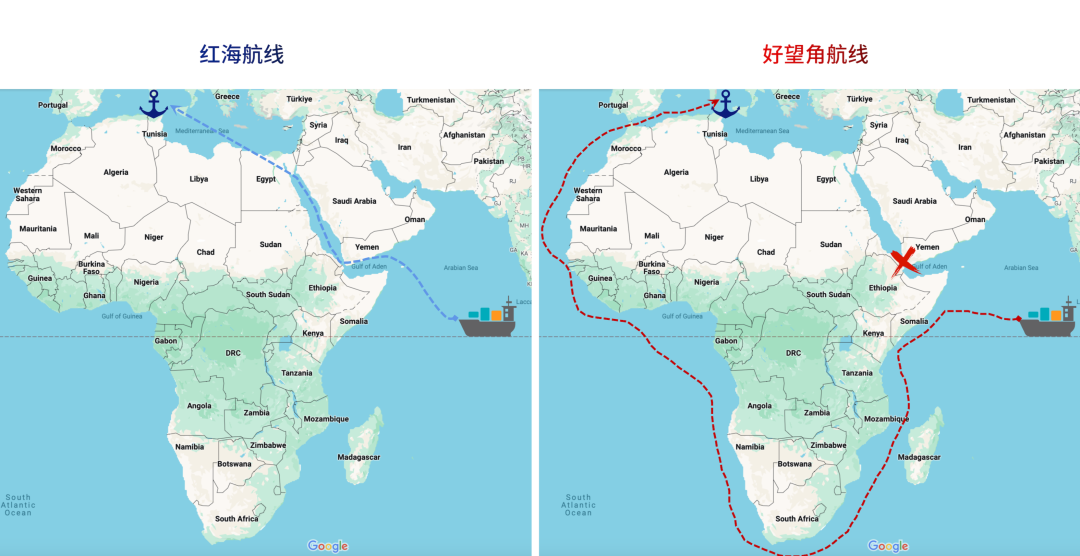
Following the Gaza ceasefire agreement last December, CMA CGM and Maersk tested Red Sea crossings first, but full-scale resumption will take time. Even with stable conditions after the Spring Festival and no escalation in Iran-related tensions, route adjustments will not be completed until mid-2026 at the earliest.
“Resumed Red Sea shipping” has two direct consequences:
First, European port congestion. A surge of disorganized vessel arrivals will likely trigger a chain reaction: port queuing and congestion, insufficient terminal throughput, warehouse and yard backlogs, and empty container shortages in Asia.
Second, downward pressure on freight rates. After resumption, capacity tied up in Cape of Good Hope diversions will be released, creating short-term overcapacity of up to 15% and affecting freight rates globally, not just on Red Sea routes.
Even if carriers idle, scrap, or slow ships to support rates, structural overcapacity will persist: 2026–2027 will see a peak in new vessel deliveries, with pandemic-era shipbuilding orders launching in large numbers. Global capacity is projected to rise 5% in 2026 and 10% in 2027.
Like the pig farming cycle, shipping cycles are mismatched and lagged, determined by past commitments rather than short-term market sentiment.
Risk warning: The Middle East situation remains unstable. This forecast is based on current international conditions, and freight rates in this sensitive industry are vulnerable to sudden shocks.
06. Global Economy in 2026: Global GDP Growth of 2.6%, U.S. Growth of 2.2%, Eurozone Growth of 0.9%
The World Bank’s “Global Economic Prospects 2026” has been released: despite tense trade conditions and high policy uncertainty, the global economy has shown greater-than-expected resilience.
Global GDP forecasts for 2025–2027: 2.7%, 2.6%, and 2.7%, with low growth becoming the new normal, yet underpinned by solid fundamentals.
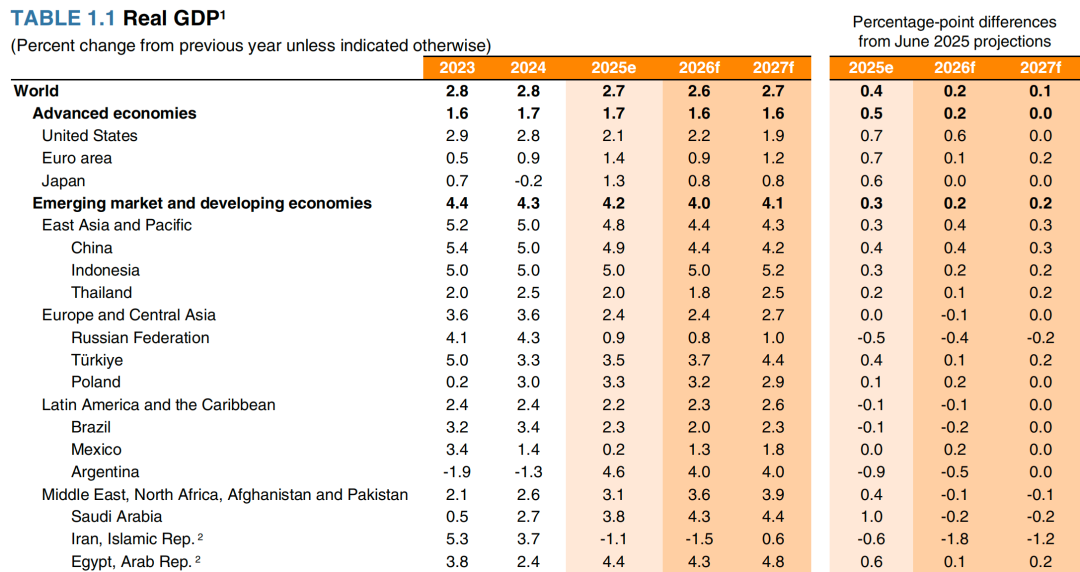
Latest World Bank forecast, January 2026
Major market forecasts:
U.S.: 2.2% growth in 2026, 1.9% in 2027;
Eurozone: 0.9% growth in 2026, 1.2% in 2027;
Developed economies overall: 1.6% growth in 2026, 1.6% in 2027;
Others: Mexico 1.3% (strong increase), Japan 0.8%, Poland 3.2%, Saudi Arabia 4.3%, Indonesia 5.0%, Russia 0.8%, Brazil 2.0%.
07. U.S. in 2026: Economy “Cool First, Heat Later”, Fiscal Stimulus in Q2, Cooling Tariff Wars, and Vigilance Toward Midterm Elections
Over the past year, the biggest name in cross-border e-commerce has been Trump.
Fact: As of January 20, he has only been in office for one year, with three more years likely to bring policy shifts.
We aim to identify certain forecasts, but with a president who announces “successful arrests” on social media at 4 a.m. from Mar-a-Lago as casually as ordering takeout, any prediction can be proven wrong.
In 2026, three factors directly impact cross-border e-commerce: consumption, tariffs, and interest rate cuts.
The “cool first, heat later” economic trend stems from the lingering side effects of last year’s tariffs into the first half of this year, but a new wave of spending is on the horizon.
To secure victory in the 2026 midterm elections, Trump’s “Big and Beautiful” fiscal stimulus package will launch in Q2, featuring tax exemptions, cuts, and subsidies expected to boost e-commerce consumption in the second half of the year.
For the highly anticipated “tariff war”, we forecast a period of détente in U.S.-China trade tariffs in 2026.
Having waged tariff battles across two terms, with rates supercharged to 145% in 2025, Trump has found the strategy ineffective and costly.
His immediate priorities are inflation, approval ratings, and winning the November midterm elections — his key performance indicator. Victory is non-negotiable.
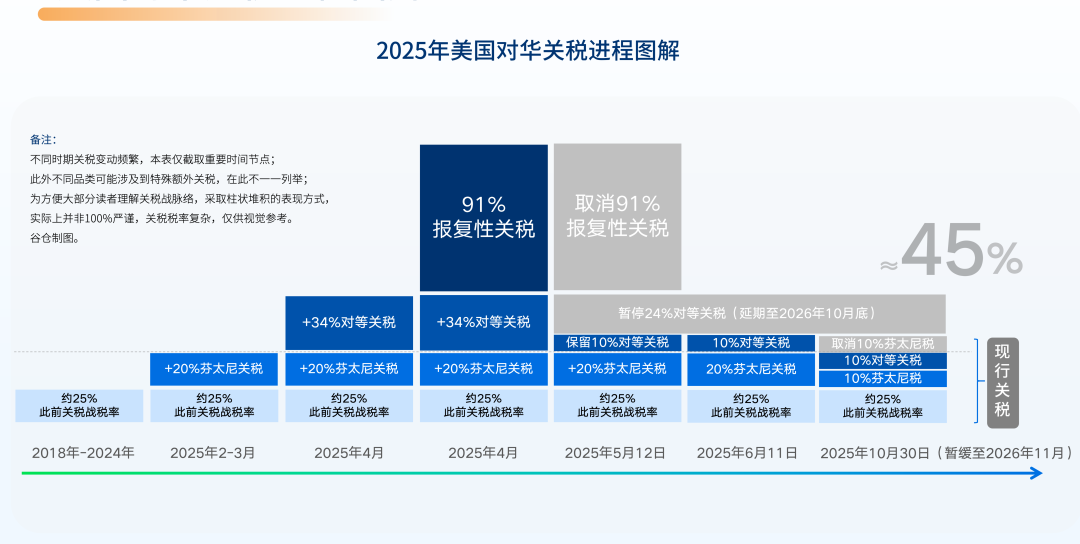
Timeline of U.S. tariff policies
After the Kuala Lumpur negotiations last year, a U.S.-China tariff “moratorium” lasts until November 2026, with a tacit understanding of rapid breakdowns and quick repairs.
During this period, to appeal to voters and shape public narrative, Trump may announce sudden, short-term, symbolic tariff threats (e.g., linked to Iran), but rate increases will be smaller than in 2025.
On Federal Reserve rate cuts: We forecast two rate cuts in 2026, totaling 50–75 basis points, bringing rates to around 3.00%.
For cross-border e-commerce, lower rates directly stimulate the U.S. residential replacement and home improvement market. Combined with Trump’s “Big Housing Plan” moving from blueprint to construction, sellers of home goods, appliances, building materials, and hardware will benefit.
Wildcards:
1. The “Big and Beautiful” package is stalled or scaled back, disappointing consumers and leading to weaker-than-expected consumption recovery.
2. Midterm elections. Risks of both parties stoking “hardline China policies” for votes and reigniting tariff wars;
08. Europe in 2026: Economy “Moderate”, €3 Tariff Taking Effect in July, and Easing Relations Between China, Europe, Canada, and Australia
Europe has followed the U.S. in adopting tariffs, which are arriving late but surely.
Starting July 1, 2026, the EU will “eliminate tax exemptions for small parcels under €150”, imposing a €3 tariff per package based on 6-digit HS codes.
Meanwhile, a proposal is under consideration to add a €2 processing fee by late 2026, separate from the tariff, with both subject to VAT of 17%–27% on top of the charges.

09. RMB Exchange Rate: Strengthening Euro, Weakening U.S. Dollar, Moderate RMB Appreciation, Fluctuating Within 6.7–7.2
The RMB quietly broke through 7 in early January, and this is just the beginning.
The clearest and most certain driver of RMB appreciation in 2026 is the Federal Reserve’s ongoing rate-cut cycle, weakening the U.S. Dollar;
Additionally, China’s trade surplus exceeded $1 trillion for the first time in the first 11 months of 2025 and is expected to continue in 2026, encouraging foreign exchange holders to accelerate conversion and supporting moderate, two-way RMB appreciation, with a core annual range of 6.7–7.2.
While appreciation is not favorable for exports, extreme exchange rate volatility is far more damaging. A “stable exchange rate” equals “stable profits”.
Wildcards:
1. U.S. Supreme Court rulings on Trump’s “reciprocal tariffs” introduce short-term exchange rate unpredictability;
2. New conflicts or spillover from existing wars in South America, the Middle East, or Ukraine drive safe-haven capital into the U.S. Dollar, strengthening it;
3. The RMB/EUR exchange rate sees two-way volatility and moderate depreciation, with complex dynamics heavily influenced by the U.S. Dollar.
Cross-border e-commerce is more resilient than we think.
Tariff shocks have disrupted global markets, yet e-commerce has continued to grow, with U.S. peak-season consumption rising 5.3%. Stubborn inflation persists but cannot suppress consumer spending; the economy is one thing, daily life another. Amid fierce platform promotions, cross-border e-commerce has grown as projected, with market penetration outpacing industry competition…
Cross-border e-commerce has evolved from a trend-chasing industry to one that navigates storms. Growth will become the new normal, driven not by accidental windfalls, but by a solid, established track.
The Year of Bingwu Horse, associated with fire and the color red, brings our wishes to all business owners: prosperous operations, successful ventures, booming orders, and great sales in the Year of the Horse!
This article is for data collection and opinion sharing only. The views expressed are those of the author and do not represent Goodcang’s position, nor do they constitute any commercial advice.