That's right, chingu (friend). Here comes your Korean oppa.
Don't laugh.
I'm not kidding.
Beyond the "three treasures" of PSY, plastic surgery, and kimchi, cross-border e-commerce in Korea has quietly emerged as a top-tier destination for global sellers:
In 2025, South Korea's e-commerce sales reached approximately $137 billion, making it the 4th largest cross-border market globally. Its e-commerce penetration rate was 28.3%, also ranking 4th in the world. Online shopping participation stood at 76.4%, ranking 4th in Asia-Pacific. In 2024, South Korea was the 4th largest economy in Asia, with a GDP of $1.87 trillion.
Small territory, big e-commerce. A market experiencing a "dual explosion" in both sales and penetration rate is on the rise.
In Q4 2025, we pulled off a major move — the expansion and upgrade of HGC Haishin Korea Warehouse Incheon No. 2 is now complete and officially open for receiving goods, helping sellers seize opportunities in East Asia and tap into the Korean market. In 2026, opportunities are everywhere.
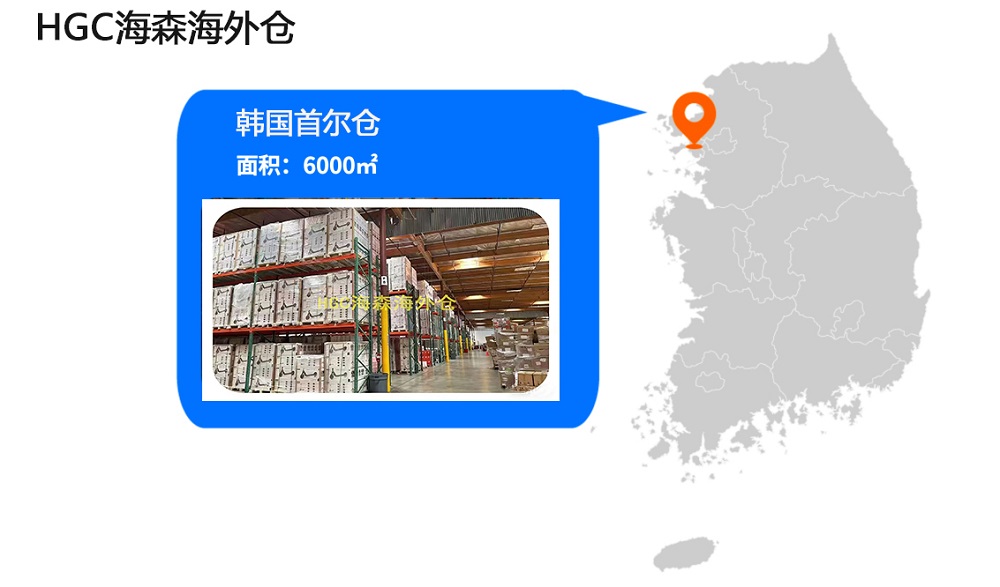
Location: Incheon, South Korea
Area: 6,000m²+
Service Coverage: All of South Korea
Business Model: Primarily dropshipping, supporting customized value-added services such as rocket warehouse inbound, labeling, and quality inspection
Last-Mile Services: Hanjin Express + regional last-mile delivery, supporting economy delivery and same-day delivery
Nearby Transportation: Incheon Port, Incheon Airport, Hogupo Station
"Korea's Power Warehouse Debut"
a. Old Horse, New Saddle
HGC Haishin Korea Warehouse first opened in 2022. This expansion and upgrade was driven by the need to support the business growth of our clients. The new warehouse has completed its operational transition and is ready for collaboration at any time.
b. Maximum Throughput
The Korea Warehouse has a peak order processing capacity of 7,000 orders per day. D0 inbound shelving timeliness rate is 99%, D0 scanning timeliness rate is 98%, and D+1 delivery timeliness rate is 98%. Even a small country can achieve great efficiency.
c. Location Advantage
Located in the prime area of Namdong-gu, just a 15-minute drive from Incheon Port and a 30-minute drive from Incheon Airport, and less than 500 meters from Hogupo Station on the Suin-Bundang Line. Staffing during peak seasons and inbound arrivals via Incheon are both a step ahead.
d. Chinese Team
An all-Chinese operations management team with years of practical logistics experience in Korea, combining HGC Haishin's efficient and unified standards with localized Korean service features. We understand both you and Korea, ensuring smooth communication and reliable delivery.
*Bonus: Reply "Report" on our official WeChat account to receive two free in-depth reports — HGC Haishin Warehouse "Korea Cross-Border E-Commerce Market Analysis Report" + Ministry of Commerce "Guide to Overseas Investment Cooperation – South Korea Edition" in high-definition PDF, helping you gain a more comprehensive and convenient understanding of Korea's cross-border e-commerce market.
"Seize East Asia, Tap into Korea"
1. E-Commerce Economy: Strong Performance in Both Economy and Consumption
In the competitive landscape of East Asia, while Korea's population is relatively small, its e-commerce economy stands "second to none" as cross-border volume surges.
In 2024, South Korea's GDP per capita reached $36,000, surpassing Japan and on par with Spain. More encouragingly, international institutions are generally optimistic about South Korea's economic outlook for 2026, forecasting growth of over 2% compared to 2025. In November of this year, Korea's consumer confidence index reached 112.4, the highest in nearly eight years, reflecting positive momentum in both economic expectations and consumer spending.

Specifically for e-commerce, from 2017 to 2030, South Korea's e-commerce market is expected to grow from $41 billion to $97 billion, with a compound annual growth rate of 7%, forming the foundation for cross-border e-commerce growth.
After all, as neighboring countries separated by a body of water, China and Korea share the East Asian cultural sphere. Korean buyers have a natural affinity for "Chinese goods":
Research institutions show that in 2024, South Korea's overseas shopping exceeded 7 trillion won for the first time, a year-on-year increase of 19.1%, of which 60% of goods came from China, with market size growing by 48%.
Among the main purchasing group — those under 30 — young people's willingness to buy Chinese goods increased by 212% compared to 2020, with categories such as beauty, personal care, and smart home products growing by over 40% annually.
From a trade perspective, China has been South Korea's largest trading partner for 21 consecutive years, while South Korea is China's second-largest trading partner. The deep complementarity of their goods supply chains forms the broader backdrop for the rise of cross-border e-commerce in Korea.
2. Hot-Selling Categories: Blue Ocean for Domestic Goods, Seller Dividend
Looking at the category structure, cross-border e-commerce has deeply penetrated the daily life scenarios of Korean buyers.
According to STATISTA data, categories such as furniture, apparel, food, beauty and personal care, and 3C home appliances continue to grow. In recent years, Korean buyers have placed greater emphasis on health, with outdoor products like camping, fishing, and hiking also gaining widespread attention.
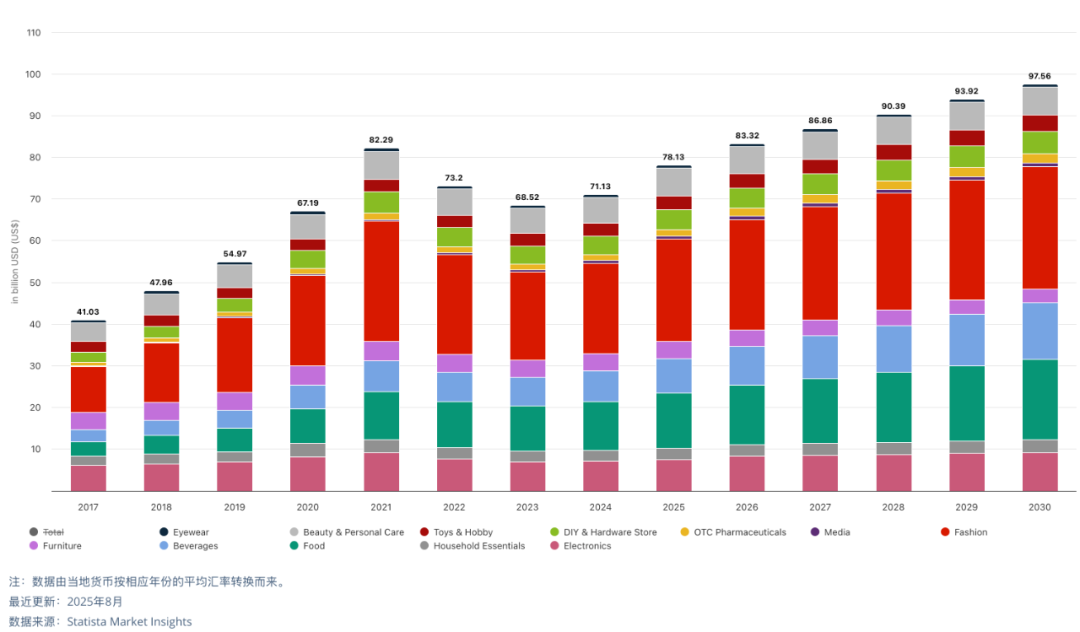
Category Growth Trends in Korean E-Commerce (statista)
These popular product categories are primarily Chinese-made, previously sold in bulk via Korean intermediaries through B2B channels. With the rapid penetration of cross-border e-commerce, sellers can now bypass intermediaries and reach end consumers directly, achieving higher profit margins.
Typical categories include:
Home Appliances/3C: The most highly e-commercialized category in Korea, with widespread online purchasing. According to Statistics Korea, online transaction volume for home appliances has reached 53.7%, making it the top-ranked category and the only one with online penetration exceeding 50%.
Smart Home: Recognized as the third-largest smart home market globally (after China and the US), with device penetration of 40%, far exceeding the global average of 20%. In 2025, the market size reached $12 billion, with annual revenue growth of 18%.
Small-Space Products: Limited living space, the "lazy economy" of middle-class families, and sophisticated single-person apartments have driven demand for functional furniture that maximizes space utilization, minimalist designs, and systematic storage solutions.
In recent years, Chinese e-commerce platforms such as Temu, SHEIN, and AliExpress have entered the Korean market, causing significant disruption and competing head-to-head with local platforms like Coupang, Naver, and Gmarket. Coupang, South Korea's largest e-commerce platform with over 60% market share, is often called "Amazon Korea" and can be understood as a combination of "Pinduoduo + JD Logistics."
In summary, Korea's e-commerce landscape is a battleground where local platforms defend their turf and Chinese platforms challenge them. Mastering both the commerce and logistics sides is essential to carving out growth in this high-potential market.
3. Buyer Preferences: Want What's Right, and What's Premium
With an internet penetration rate of 97.4%, a household internet penetration rate of 99.96%, and a smartphone penetration rate of 94%, South Korea provides a natural foundation for an e-commerce economy. In 2024, online spending accounted for 52.9%, surpassing offline for the first time.
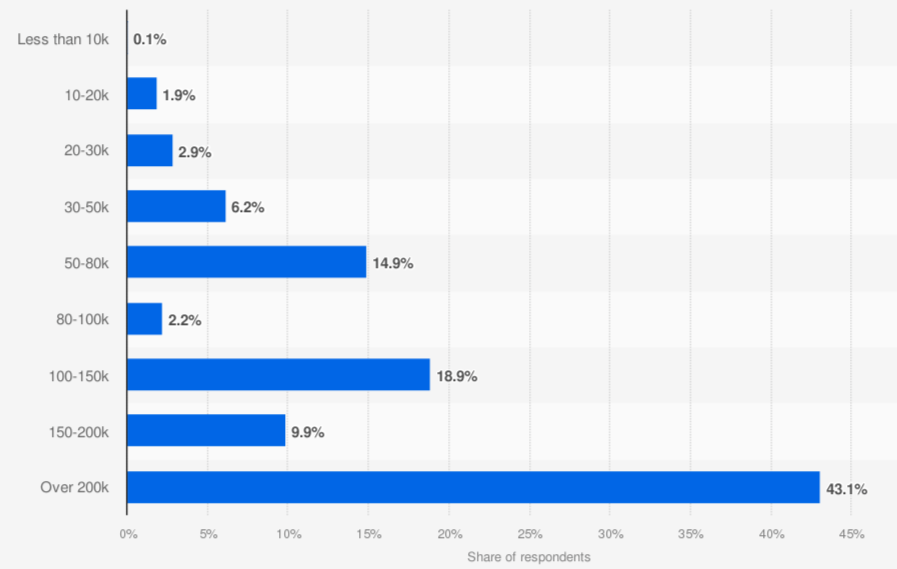
Monthly Online Spending Distribution of Korean Buyers, December 2024 (Unit: thousand KRW, statista)
As the country undergoes structural transformation, South Korea has a large middle class, with high-income earners (annual income exceeding $80,000) accounting for only 15%. This presents a dual demographic and income dividend. Buyers "want what's right, and what's premium": they have high acceptance of e-commerce and strong demand for high-value consumer goods, beauty products, fashion, and premium home appliances.
Compared to other countries, the most distinctive difference in Korea is logistics.
South Korea is a "delivery nation," or more specifically, an "impatient nation." Logistics speed is the universal currency of Korean e-commerce.
Local platforms like Coupang's "Rocket Delivery" offer same-day delivery for morning orders and next-day delivery for evening orders in the capital area, similar to JD.com's speed in China's first-tier cities. This has forced "foreign players to follow suit": Chinese platforms like AliExpress and Temu are competing not only on price and service but also on logistics speed.
Korean buyers, educated under a local logistics "fast culture," have grown accustomed to premium service and vote with their wallets at double speed: next-day delivery is considered passing, and same-day delivery is becoming the default expectation.
To conquer the Korean market, "time is money, and efficiency is life." A Korean warehouse that can adapt to the local pace is essential.
4. Why HGC Haishin Warehouse: Prime Location, Full-Chain Upgrades
HGC Haishin's overseas warehouse site selection follows the principle of "high alignment with population and orders."
South Korea's geography is dominated by mountains and hills, with the population mainly concentrated in the western coastal Han River Plain and the southeastern coastal Nakdong River downstream plain. The core areas are the capital region (Seoul, Incheon, Gyeonggi Province):
This region concentrates 47% of the national population and 60% of GDP, making it the "Beijing-Shanghai-Guangzhou-Shenzhen of Korea." It is not only the most densely populated and economically developed region but also the leading consumer area and the primary source of cross-border e-commerce orders — the main battleground.
"Win the capital region, win the Korean market."
This is the logic behind HGC Haishin Korea Warehouse's site selection: based in Incheon, radiating to the golden center of the capital region. The flow of outbound orders aligns closely with population distribution — order volume in the capital region is extremely high, followed by areas like Busan on the southeastern coast.
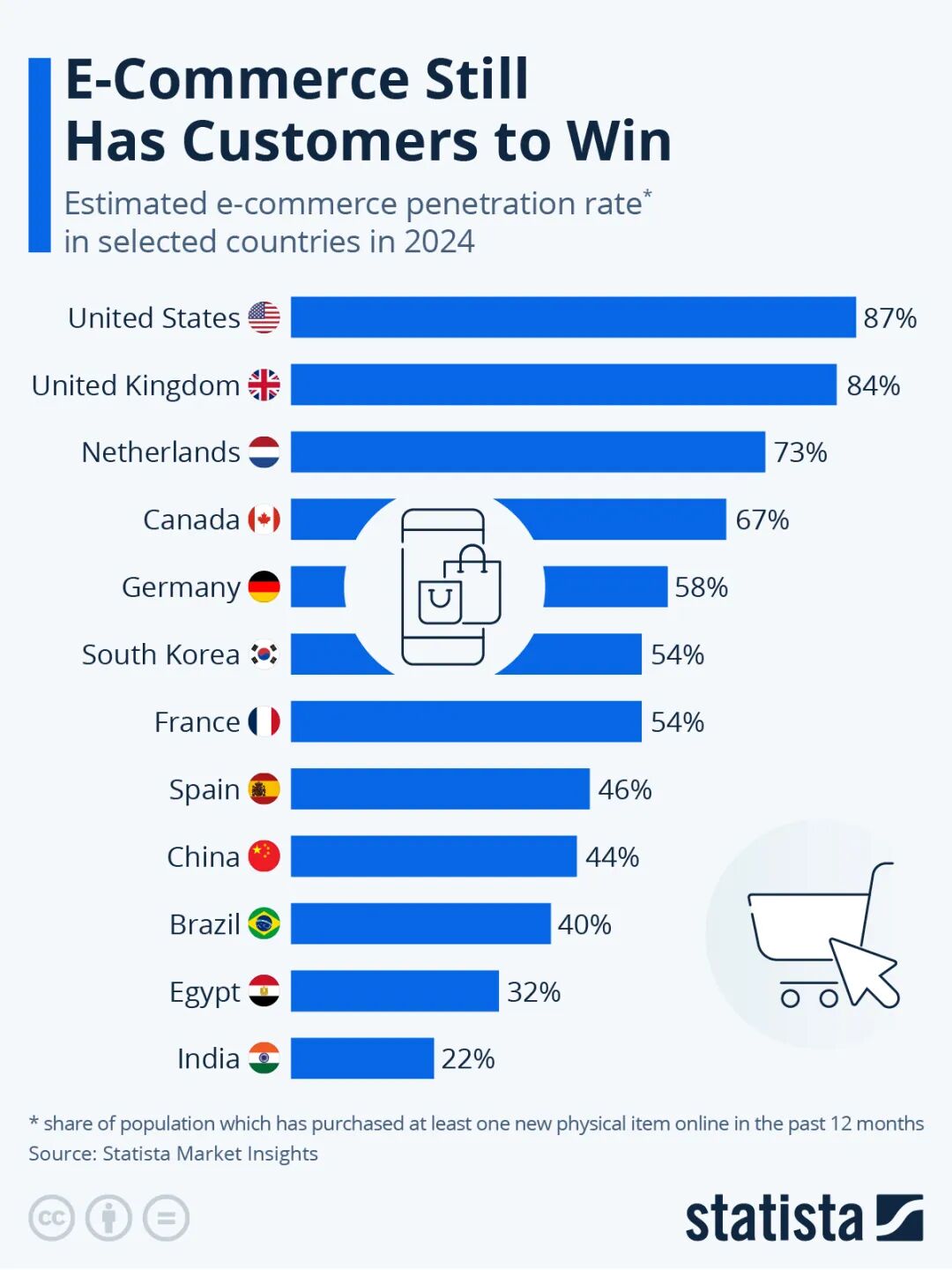
Online Shopping Population Ratio, 2024 (statista)
At the end of 2025, HGC Haishin Korea Warehouse underwent another expansion and upgrade — not only an increase in physical space but also a renewal of both software and hardware:
From inbound, shelving, and storage to picking, packing, and outbound, HGC Haishin's OWMS system digitizes and visualizes the entire process, achieving high operational efficiency and inventory accuracy, providing sellers with stable and scalable local fulfillment capabilities.
Compared to traditional logistics warehouses in Korea, HGC Haishin's VNA forklifts reduce aisle width between racks by 40%, significantly improving warehouse capacity utilization. Additionally, with OP picking forklifts, operational safety is enhanced while greatly improving picking efficiency for high-level rack positions.
In Korean e-commerce, last-mile delivery speed is the core competitive advantage.
HGC Haishin partners with Korea's second-largest delivery company (Hanjin Express), covering all regions of the country. Orders handed over before 17:00 achieve a next-day delivery rate of 98%. In addition, working with regional last-mile providers in Korea, we offer more economical services without compromising the customer experience. We also provide "same-day delivery" options based on client needs, meeting the diverse requirements of different sellers.
In 2026, with the implementation of South Korea's large-scale economic stimulus plan and the impressive performance of the new administration, the potential of its consumer market will be further unleashed.
Understanding the pain of warehouse migration, HGC Haishin Korea Warehouse offers a comprehensive one-stop "migration service" — from truck transport and pallet rental to system integration. Clients can complete a smooth warehouse migration in as little as two weeks, avoiding the risk of stockouts and fulfillment interruptions.
On the other hand, with a rapidly growing market and an upgraded, expanded warehouse, everything is ready — we're just waiting for you to stock and partner with us.